
01
Get the knowledge into data
The daily rules and tribal knowledge live in people's heads. Step one is getting them out and into data the optimizer can actually use.
Autonomous routing is near: The essential four steps that will get you there
A grocery retailer ran same-day, self-optimizing delivery over a decade ago, with no planner and no AI. Closing the one gap that held it back is what lets the same planning team run a far larger network today, without adding headcount.
The conversation has started. Register in the panel to join.
In 2011, a grocery retailer in Greece was already running autonomous routing. Orders arrived at each store by phone, fax and email. Five or six times a day the system optimized them and assigned them straight to vehicles already on the road. Store staff who had never used planning software ran a same-day delivery operation. No planner intervened, and no AI was involved.
So why is nobody operating that system today? Because the plan was only ever as good as the data going into it, and back then the data was full of holes: wrong coordinates, missing postcodes, a driver quietly rerouting because the address was wrong.
The system was autonomous, but it never learned. As the business ran, the plans drifted further from what actually happened on the road. Closing that gap is what has changed.
ORTEC's George Ninikas, who holds a PhD in vehicle routing optimization, maps the four essential steps that take an operation to autonomous in under three years. This is the spine of the session and the framework to take back to your own operation.
The daily rules and tribal knowledge live in people's heads. Step one is getting them out and into data the optimizer can actually use.
Not an operation run by robots with nobody at the wheel. Complexity is removed and planners are pulled in only when a decision genuinely needs them, so one planner covers a wider network.
Fire the optimizer against live orders and vehicles already out on the road, so the plan reflects the operation as it runs, not a snapshot from the morning.
Where the compounding value sits: a plan that recalibrates itself after every run.
What autonomous routing actually means in operations today, and what has to be true before you let go of the wheel.
The four steps as a spine to map against your own operation and a realistic path to autonomous in under three years.
Practical examples of the data the system must collect and use: stop times, travel times and driver familiarity that update before the next run.
The question interviewer James keeps putting back to George, answered directly, and why the buyer should care about the difference.
A conversation format: George sets out the thinking while James presses on the questions that matter to buyers.
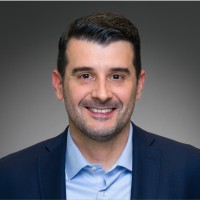
George is the SVP of Sales and Accounts for the Americas at ORTEC, leading growth initiatives, strengthening client relationships, and driving sales excellence across North and South America. Since joining ORTEC in 2010, George has advanced through a series of increasingly senior roles thanks to his ability to translate complex technologies into client-focused strategies that deliver measurable value. Previously serving as Industry Director for Retail & Wholesale, he shaped market strategy and leveraged advanced analytics to improve efficiency, profitability, and customer experience for major clients. His appointment as SVP reflects his exceptional leadership, strategic vision, and proven track record in building and sustaining high-performance teams. In addition to his corporate achievements, George holds a Ph.D. in Operations Research with a focus on vehicle routing problems and has university-level teaching experience, combining academic rigor with practical business impact.